
Last updated November 22, 2026
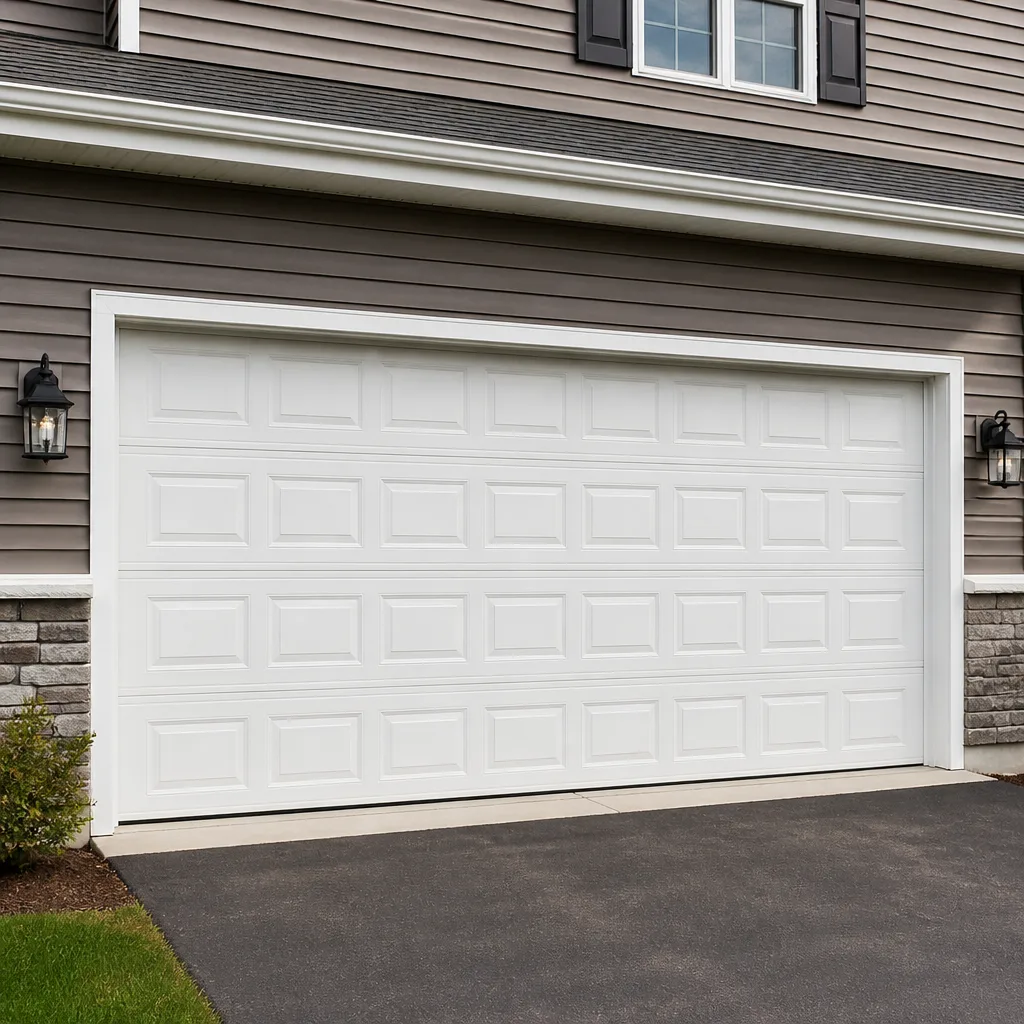 Raised-panel steel
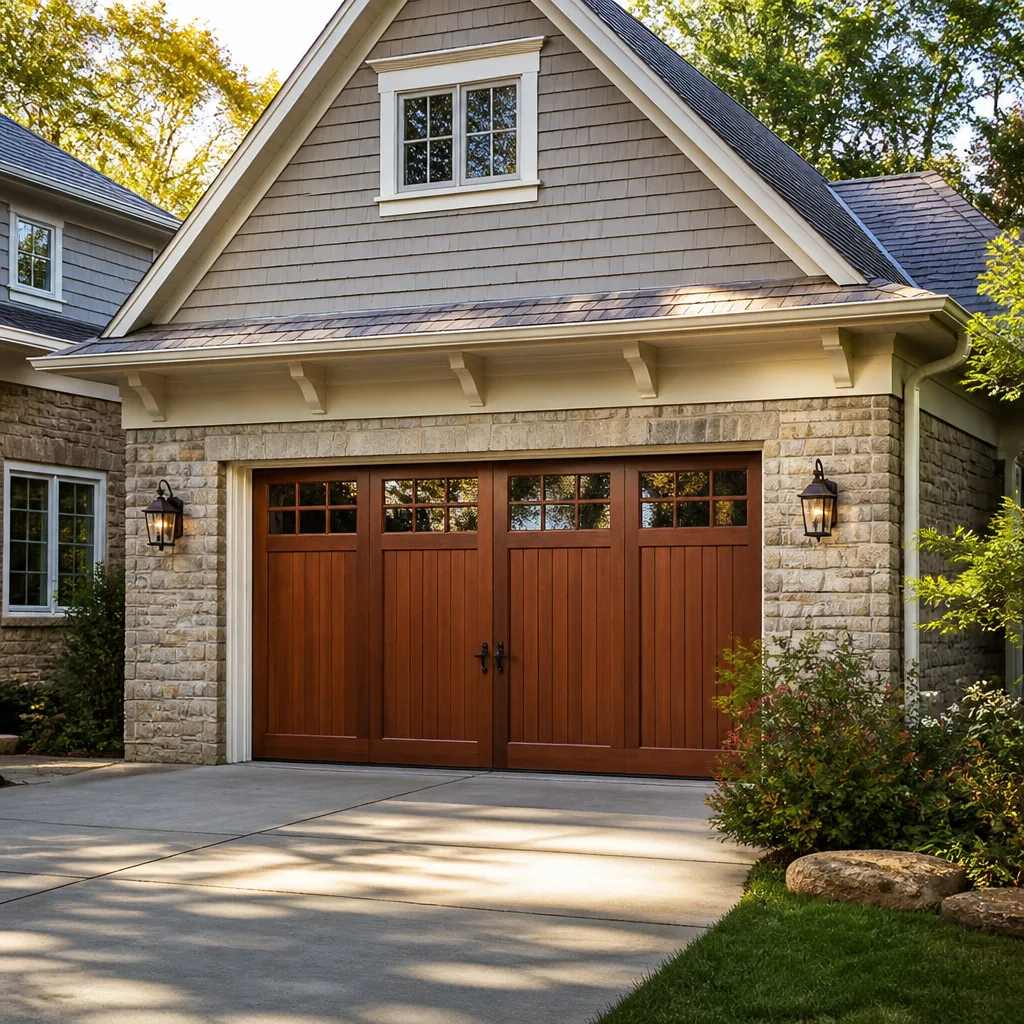 Carriage house
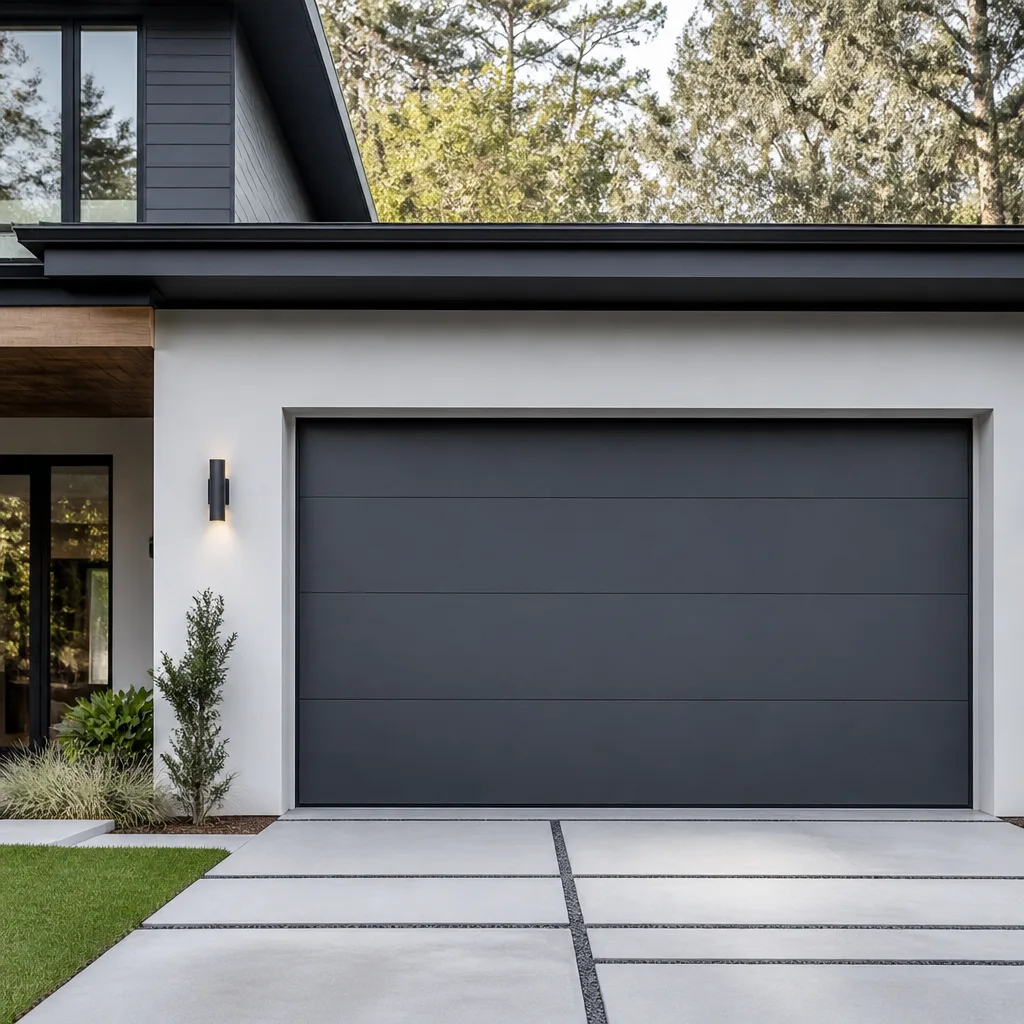 Modern flush
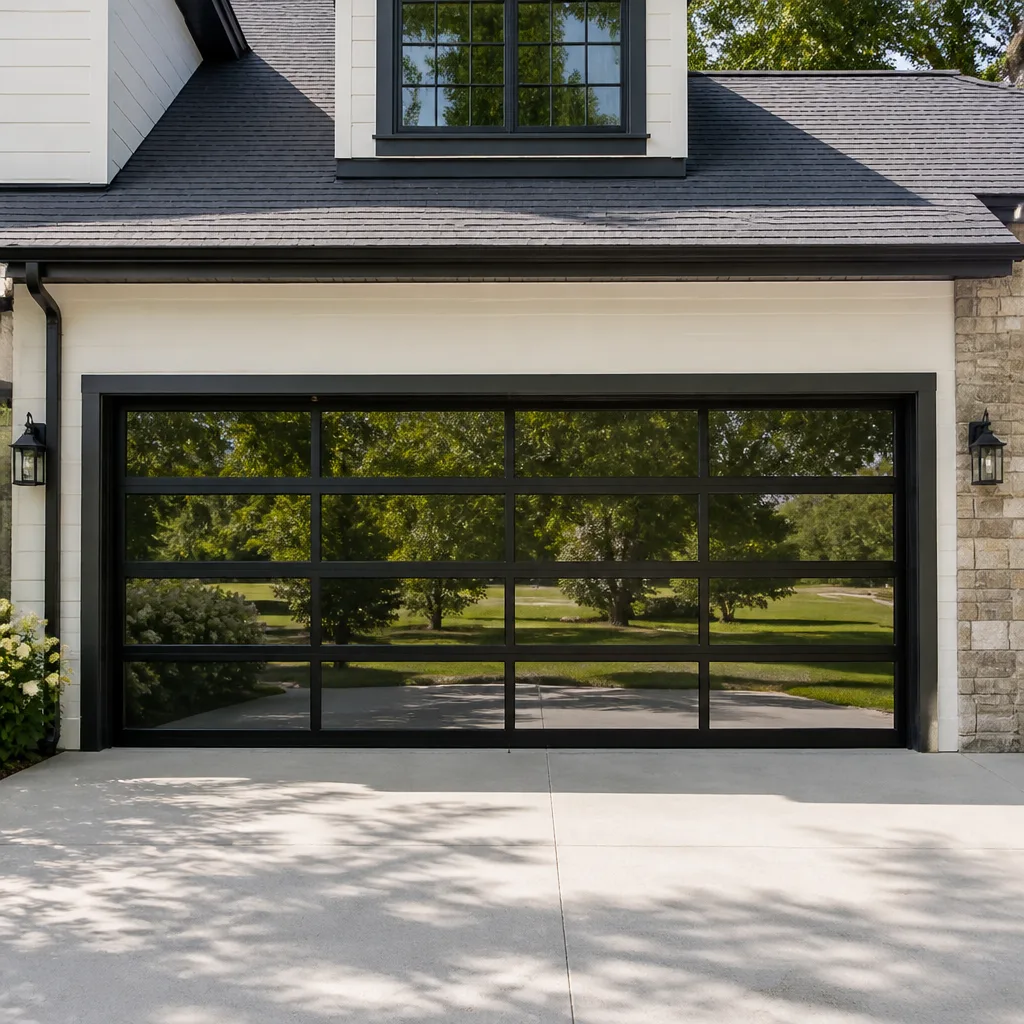 Full-view glass
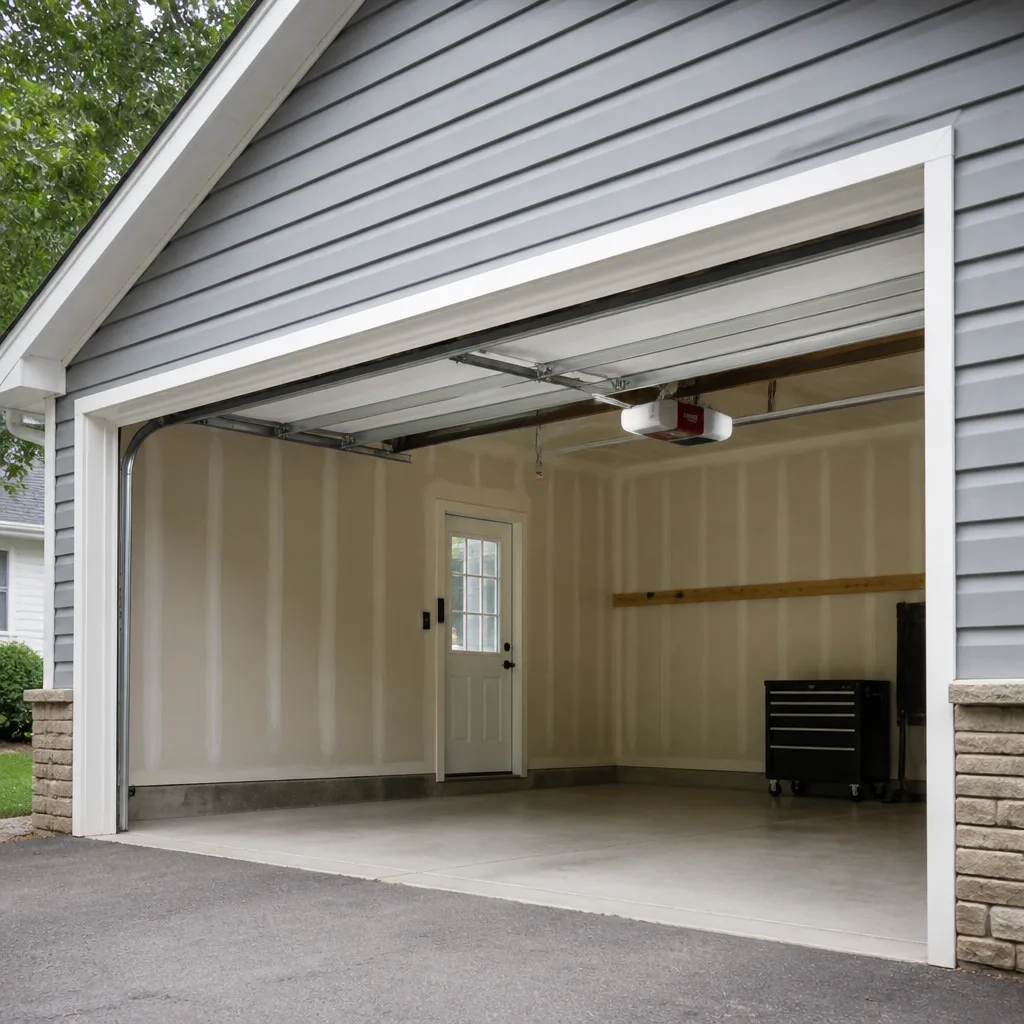 LiftMaster openers
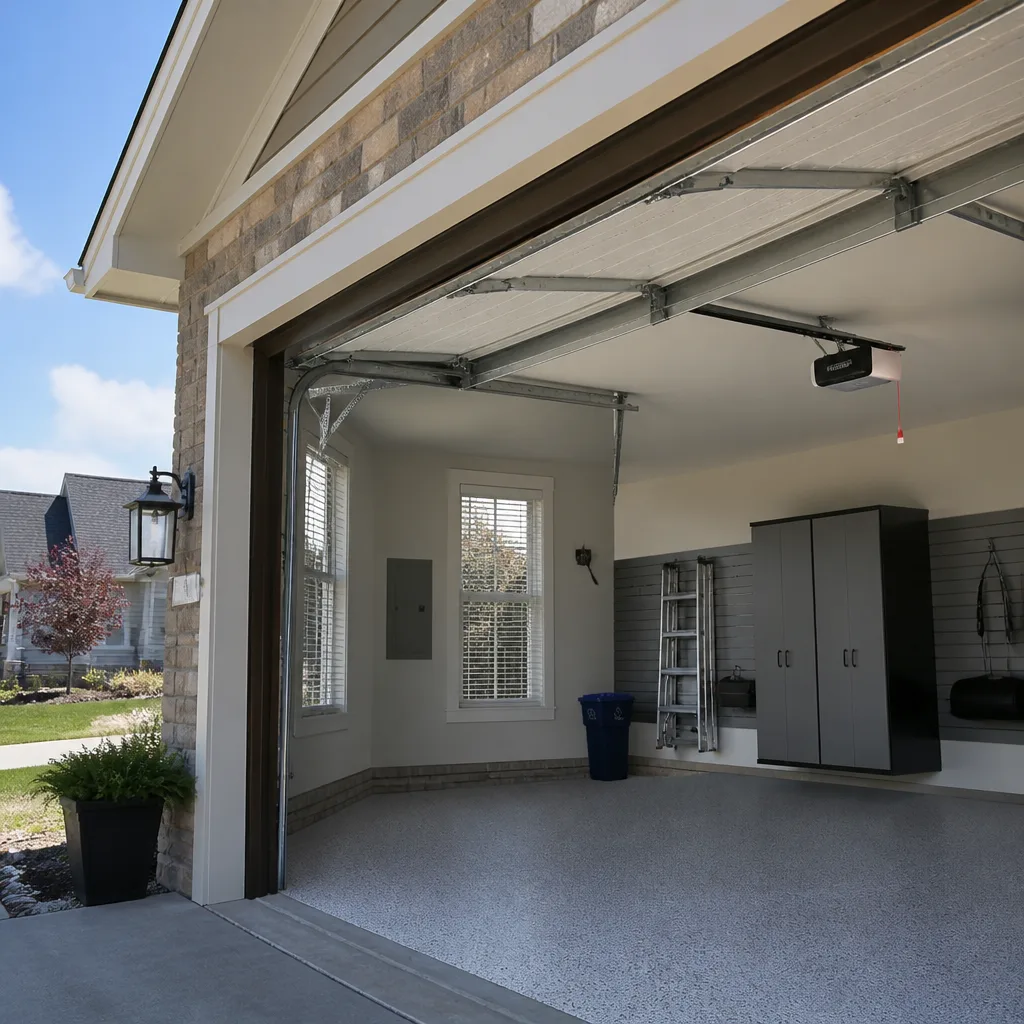 Chamberlain openers
Full 25-point door and opener safety check with every visit - springs, cables, rollers, tracks, and your LiftMaster or Chamberlain opener included
You get a price before we start. It does not change when the pro arrives.
Get your free estimateThe Complete Guide to Garage Doors in Delaware
Most Delaware homeowners don’t know what brand their garage door opener is until it stops working at 7am on a February morning. That single gap in knowledge, common and understandable, often doubles what the repair ends up costing. The wrong part gets ordered. The wrong technician gets called. And an opener that needed a $15 gear and sprocket gets replaced because nobody could identify the unit before quoting. Delaware, OH sits in a pocket of central Ohio where freeze-thaw cycles, clay-heavy soil, and a housing stock spanning several decades create garage door problems that generic national advice doesn’t address well. This guide covers what actually fails here, how to think about your door as one connected system rather than a pile of parts, and what to ask before anyone touches it.
Quick Answer
Garage doors in Delaware, OH fail mainly because of three local conditions: freeze-thaw cycles that stress springs and weather seals, clay-heavy soil that shifts garage floors and throws doors out of alignment, and an aging housing stock where original components hit their failure point at predictable intervals. The core principle for any homeowner: your door is a system, not a collection of parts. Treating one component as the whole problem is what turns a small repair into a full replacement. Garage Door Repair Delaware handles repair, spring work, opener repair, and full installation, and our technicians have up to 11 years of experience with the brands already in your garage.
Styles & brands we work with
- Raised-panel steel
- Carriage house
- Modern flush
- Full-view glass
- LiftMaster openers
- Chamberlain openers
Table of Contents
- Why Your Garage Door Is a System, Not a Bunch of Parts
- How Delaware’s Soil and Frost Line Affect Door Alignment
- Freeze-Thaw Cycles and What They Do to Your Door
- Door Brands vs. Opener Brands: Why the Distinction Matters
- Which Door Styles and Insulation Make Sense for Delaware
- What the Age of Your Home Predicts About Failures
- What “Full-Service” Actually Means and What to Ask
- Springs: The Part Most Homeowners Should Never Touch
Why Your Garage Door Is a System, Not a Bunch of Parts
A garage door is one of the few moving assemblies in a house where every component is loaded at all times. The springs carry the door’s weight. The cables transfer that load to the bottom brackets. The tracks guide the whole assembly. The opener only lifts a door that’s already balanced, not a dead weight. When a homeowner calls about a door that “won’t stay up” or “grinds halfway,” the actual cause is often two or three components that have drifted out of balance together over years.
This matters most at the point of decision: repair or replace? A door that needs a new spring, new rollers, and a realignment may still be a repair. A door where the panels are bent, the tracks are crushed, and the springs are gone is usually throwing good money after bad. The difference between those two situations is a full diagnosis, not a quick visual.
Here’s the sequence our technicians run through when a door stops working correctly:
- Test the door’s balance with the opener disengaged. A properly balanced door stays at the halfway point.
- Check spring tension, cable condition, and drum wear.
- Inspect tracks for bends, dents, or misalignment from either impact or floor settlement.
- Test the opener’s travel limits, force settings, and safety reverse.
- Examine panel condition, hinges, and roller wear across the full travel of the door.
- Check bottom seal and frame condition, especially where frost-driven ground movement has shifted things.
That sequence tells us whether you need garage door repair or whether a replacement makes more financial sense. Diagnosis first, repair second. That’s the order, and it’s the order that keeps you from paying for a full door when a spring and a set of rollers would have done the job.
How Delaware’s Soil and Frost Line Affect Door Alignment
Delaware, OH sits on clay-heavy ground. Clay expands when it’s wet and contracts when it dries out, and both behaviors push against anything set into it, including garage slabs and door frames. The seasonal swing in moisture means the slab your garage door is mounted on can shift by fractions of an inch across a year. That’s usually invisible, but a garage door only needs a quarter inch of misalignment to start dragging, binding, or failing to close flush.
What Delaware homeowners see when clay movement catches up with a door:
- The door closes but leaves a visible gap at one corner.
- One side of the door scrapes the track on the way down.
- The bottom seal wears unevenly, usually on the driveway side.
- The opener has to work harder because it’s fighting a door that no longer sits square.
This is a distinctly local problem. A garage door installed by a good manufacturer and properly adjusted on installation can still start to drag after a few seasons here, not because anything was installed wrong but because the ground under it moved. When that happens, the fix is usually re-alignment of the tracks and re-adjustment of the opener, not a new door. Clay movement is also a strong argument for annual inspections on any door over a few years old.
The first step when you notice your door binding is to have it checked before the opener gets damaged. A strained opener may run fine for months and then fail suddenly under a load it was never designed to handle.
Freeze-Thaw Cycles and What They Do to Your Door
Delaware, OH gets a full four-season climate with repeated freeze-thaw cycles through late fall, winter, and early spring. That cycle is harder on garage doors than any other weather pattern, because it puts moving metal under constant load and release. Springs that were fine in November often break in January, not because they aged suddenly but because thousands of small expansion and contraction cycles finally pushed them past the point they could take.
The specific vulnerabilities during Delaware’s cold season:
- Torsion and extension springs become more brittle as temperature drops, so a spring that was already near its limit snaps under the added stress.
- Weather seals stiffen and crack, letting cold air and moisture into the garage and along the door’s bottom edge.
- Metal tracks contract in cold temperatures and can pull fractionally out of alignment.
- Grease and lubricant thicken in low temperatures, making hinges, rollers, and opener rails drag.
- Bottom panel moisture accumulates where snow and ice pool at the door’s lower edge and then refreezes overnight.
Fall is the right time to schedule service in Delaware, before the first hard freeze. A tune-up that includes spring inspection, track alignment, seal check, and lubrication is cheap insurance against a mid-winter break at the worst possible moment. Homeowners who skip it often end up calling on a cold morning when their car is blocked and their garage is wide open. That’s when a snapped spring on one side becomes a two-spring replacement on the other, because matched springs should always be replaced together.
Door Brands vs. Opener Brands: Why the Distinction Matters
Here’s the misconception that causes the most misdiagnosed repairs we see from Delaware homeowners: assuming the name on the outside of the door is the same name on the unit hanging from the ceiling. It rarely is. Door manufacturers build the panels, tracks, springs, and hardware. Opener manufacturers build the motorized unit bolted to the ceiling and connected to your door via a rail and arm. Two completely separate supply chains, two separate failure timelines, two different sets of parts.
That confusion leads to misdirected phone calls. A homeowner with a door that won’t open will often tell whoever they call that “the door is broken” when the actual problem is the opener, or vice versa. Diagnosis requires knowing which side the failure is actually on.
Door manufacturers you’ll find on garages around Delaware, OH include Amarr, Clopay, Wayne Dalton, and Raynor. Opener brands in the same garages include LiftMaster, Chamberlain, Genie, and Craftsman. Most homes have a mismatched pair, because the original builder chose one door brand and swapped in whatever opener was cost-effective that season.
Why this matters in practice:
- Ordering garage door opener repair parts for the wrong unit wastes days and usually ships the wrong part.
- Warranty coverage often hinges on identifying the exact model, not just the brand.
- Smart-home integration (app control, Wi-Fi, garage camera sync) works only with certain opener generations.
- Replacement cost varies significantly across opener brands for the same job.
We work on eight major brands under one roof: LiftMaster, Chamberlain, Genie, Clopay, Amarr, Wayne Dalton, Craftsman, and Raynor. That means when you call, we can usually identify your equipment over the phone and arrive with the right approach instead of a guess. Before you call, take a photo of the opener unit’s label and the door’s bottom panel, where the manufacturer typically stamps a label. That one habit saves time on both ends.
Which Door Styles and Insulation Make Sense for Delaware
A garage door is one of the largest thermal openings in a house. In central Ohio, that matters more than most homeowners realize, because the garage often shares a wall with a living space. Insulation ratings on doors are usually expressed as R-value, and higher isn’t automatically better for every situation. A door with high insulation makes a real difference on a heated or conditioned garage. On a detached unheated garage, it makes almost no difference at all.
What actually pays off in Delaware’s climate:
- Steel-backed insulated doors with a moderate insulation rating handle central Ohio’s temperature swings well and hold up to moisture better than wood.
- Double-sided steel construction resists dents from yard equipment and basketballs far better than a single-sheet steel panel.
- Factory-applied finishes last longer here than paint or stain, especially through wet winters.
- Sectional doors with reinforced bottom panels handle the freeze-thaw abuse of a driveway-facing edge better.
What salespeople often push that doesn’t earn its keep in Delaware: top-of-line insulation on unheated garages, glass-panel styles that look great but fog up and crack in cold snaps, and carriage-house aesthetic panels on garages that face an alley or a side yard where nobody sees them. Style is a matter of taste, but performance is a matter of climate. A mid-range insulated steel door installed correctly outperforms a top-of-range wood door for our climate over a decade.
When it’s time to price a replacement, the right conversation starts with a free measure and a written quote, not a showroom sales pitch. That’s how garage door installation should work: measure, quote in writing, order the door, schedule the install. No same-day promises, because the work depends on accurate measurement and door lead time.
What the Age of Your Home Predicts About Failures
Delaware, OH has a wide age range in its housing stock, and the age of the home predicts which garage door component will fail first with surprising consistency. Knowing the pattern doesn’t replace a proper diagnosis, but it helps you anticipate.
Homes built before 1990 typically have:
- Original or once-replaced extension springs, which fail more abruptly than torsion springs.
- Single-panel wooden or steel doors where the bottom panel has absorbed years of moisture and driveway splash.
- Openers without modern safety reverse systems, especially the oldest units, which should be replaced for safety reasons regardless of wear.
- Manual lock hardware and old-style tracks that have been bent and re-bent.
- Original concrete slabs that have been subject to clay movement for decades and often show visible cracking or settling.
Homes built after 1990 typically have:
- Torsion spring systems, which fail with a clean snap and are more predictable but still need professional replacement.
- Insulated steel doors that hold up well to weather but accumulate wear on rollers and hinges.
- Modern openers with safety reverse, which need periodic belt or chain adjustment more than replacement.
- Weather seals that wear out before any other component.
If you’re in an older Delaware home and haven’t had the springs, opener, and bottom panel inspected in a few years, that inspection is the highest-value call you can make. A failing safety reverse on an older opener is a genuine hazard for kids and pets, not just an inconvenience.
What “Full-Service” Actually Means and What to Ask
“Full-service” gets printed on a lot of contractor websites without meaning much. In practice, the phrase should tell you whether a company can handle every stage of your job, from diagnosis through installation and follow-up, without handing you off to a sub. For garage doors specifically, full-service should mean: repair, opener repair, spring repair, and full installation, all done by the same trained technicians who know the brand of door and opener already in your garage.
What “one-stop” doesn’t mean in this trade: a company that also does roofing, siding, and handyman work. Garage doors are a specialist trade. Depth in one trade beats breadth across ten.
Questions worth asking any garage door contractor in Delaware before they touch your door:
- What brand is my door, and what brand is my opener? (If they can’t tell you, they’ll waste your time on the wrong part.)
- Is the estimate written, and does the quoted price hold once the door is examined in person?
- Can you do spring repair, opener repair, and a full door replacement, or will one of those get subbed out?
- What happens if I need emergency service? (A door failing at 7am on a February morning needs a real answer.)
- Is the local pro licensed and insured as their state requires?
- What happens if a part fails after the repair?
The right answers, from our own operation: yes to all four service categories, because springs, openers, panels, and full doors are the whole of what we do. Emergency service is available, because when your garage door stops working, so does your day. The price is quoted and agreed before work starts. And we work on your brand, whether that’s Amarr, Wayne Dalton, Craftsman, Raynor, or the other four major brands.
Springs: The Part Most Homeowners Should Never Touch
Garage door springs are under enough tension to cause serious injury, and this is the one part of the assembly where we advise homeowners to stop at inspection. A torsion spring on a standard door holds hundreds of pounds of stored force. If it releases wrong during DIY removal, the results can be severe. Even extension springs, which look simpler, carry lethal stored energy when tension is correct. We won’t publish a step-by-step DIY replacement because doing so would put homeowners in real danger. Spring work belongs with a trained technician, full stop.
What you can safely do: recognize the signs a spring is failing, and call it in before it breaks.
- A visible gap in the coil of a torsion spring above the door.
- An extension spring that’s stretched beyond its original length and no longer returns to normal.
- The door feels much heavier than usual when lifted manually.
- The opener runs but the door barely moves or won’t lift at all.
- A loud bang from the garage, usually followed by the door not opening.
Pricing for spring repair in Delaware runs in a range that depends on spring type, door weight, and whether wires, cables, or drums also need attention. A single-spring replacement is one price. A matched pair, which should almost always be replaced together, costs roughly twice that. The written estimate sets the final number, and we give you that estimate free before any work begins. Anything that looks like a snap quote over the phone for spring work is worth a second look.
Common Mistakes to Avoid
- Assuming the door brand is the opener brand. They rarely match, and assuming they do leads to the wrong part being ordered. Check the opener label and the door panel stamp before calling anyone.
- Greasing sealed torsion springs. Some homeowners spray lubricant on everything that moves. The springs themselves should not be greased, because grease attracts grit that accelerates wear. Lubricate rollers, hinges, and opener rails only.
- Forcing a binding door to close with the opener. When the door drags in the tracks, the opener is being asked to do work it isn’t designed for. This is a common path to opener failure and, in Ohio’s climate, is often triggered by clay movement or frost-driven track shift.
- Replacing only one spring on a matched pair. When one spring on a matched pair breaks, the opposite spring is at the same age and stress level. Replacing one and leaving the other guarantees a second call in the same season.
- Ignoring an opener’s safety reverse after a repair. Any time the opener is adjusted, the safety reverse should be tested. Skipping it means a door that closes on a child or pet and doesn’t stop.
- Choosing a door by style before insulation. In central Ohio, insulation matters more over a decade than any aesthetic upgrade. Pick the performance target first, then the style within it.
- Hiring a general handyman for spring work. Springs are a specialized, dangerous component. This isn’t a job for a general repair crew, and a specialist will usually spot related wear that a handyman will miss.
See the difference
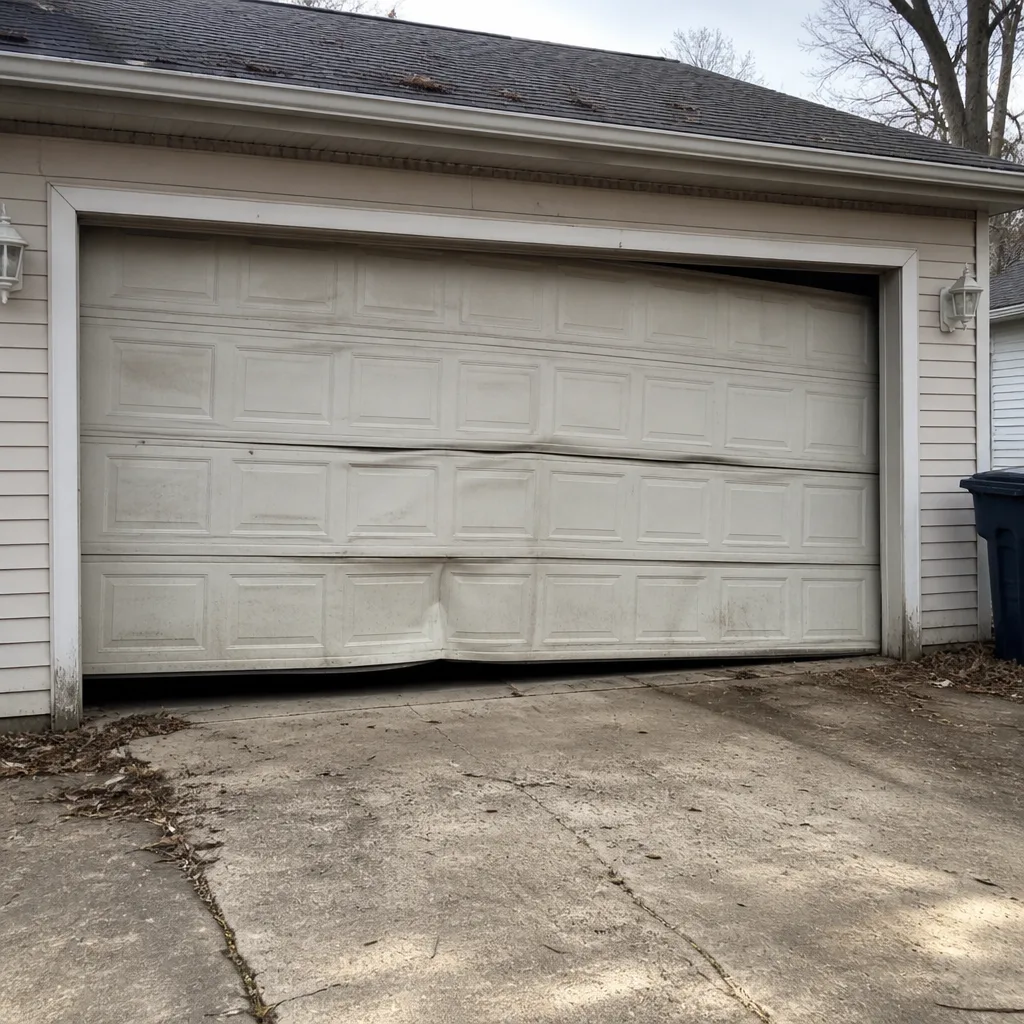 Before
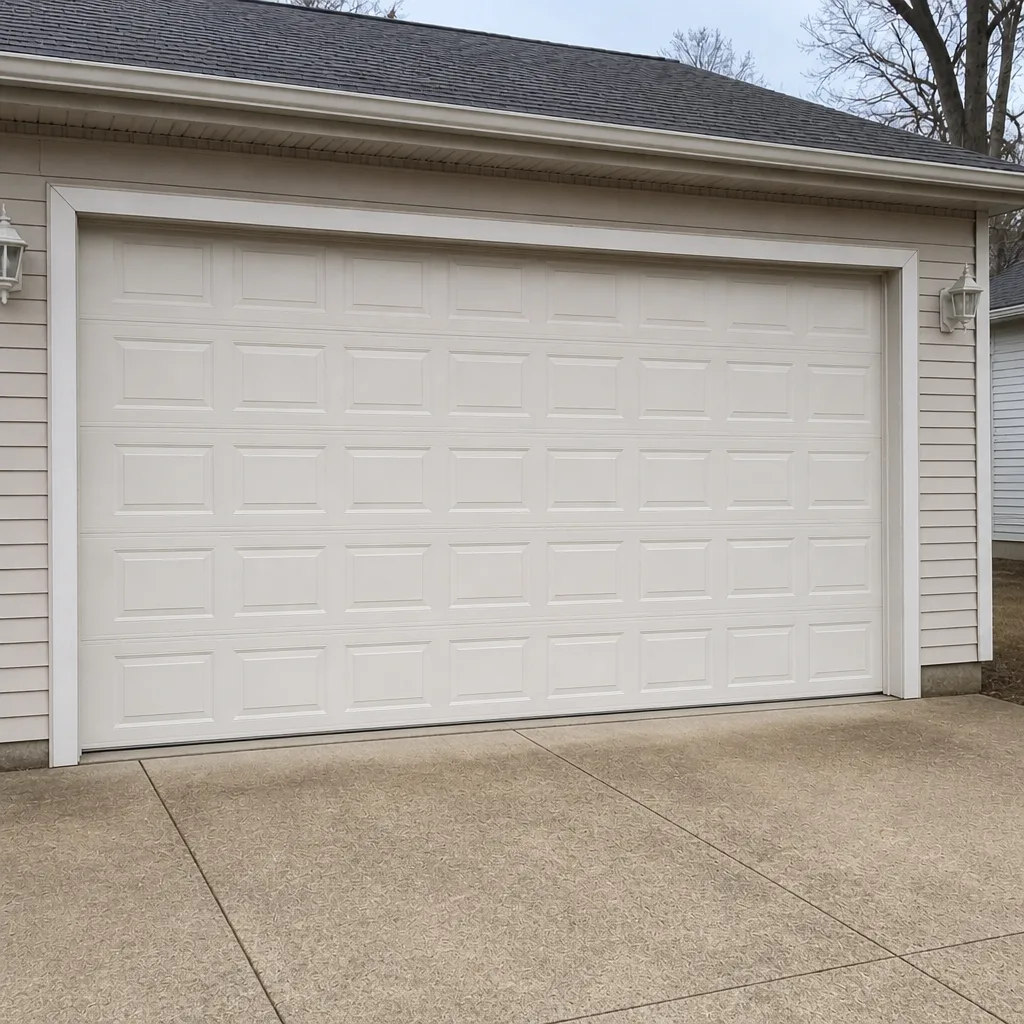 After
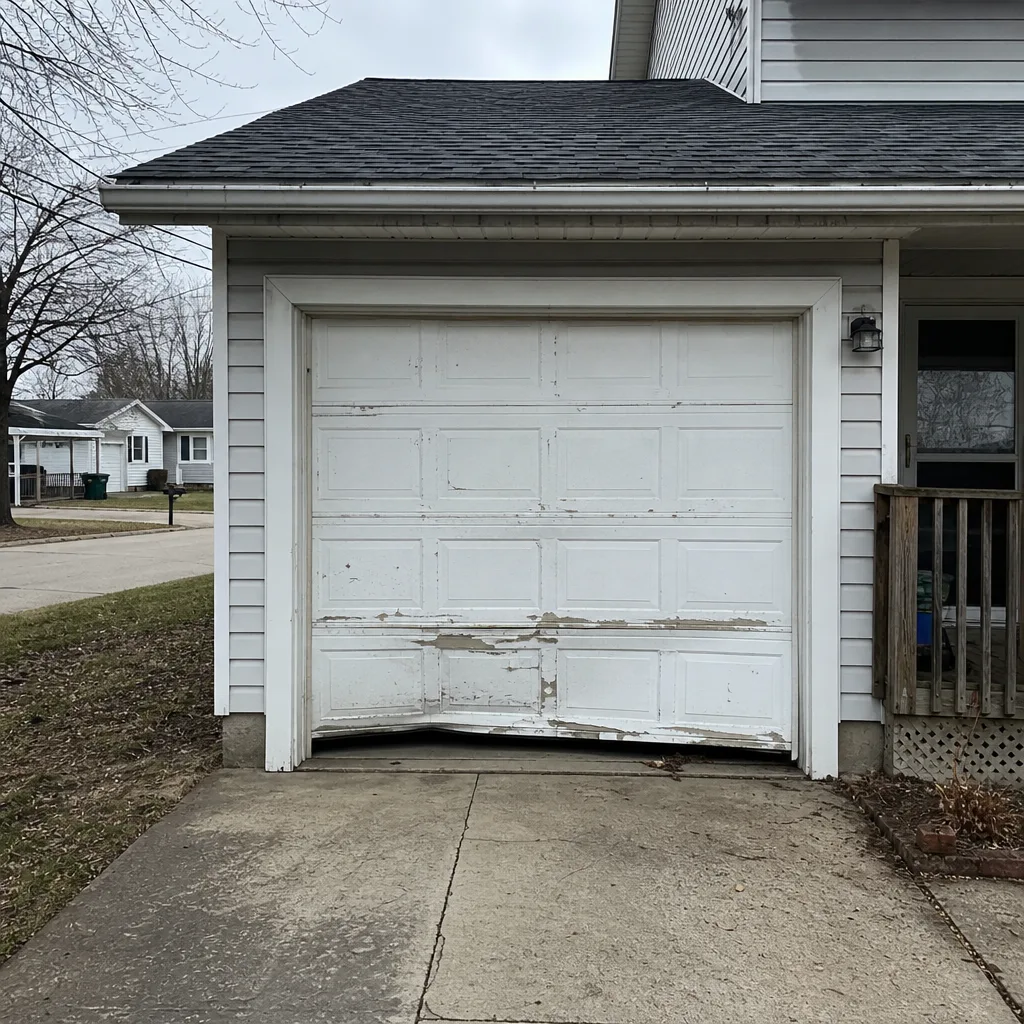 Before
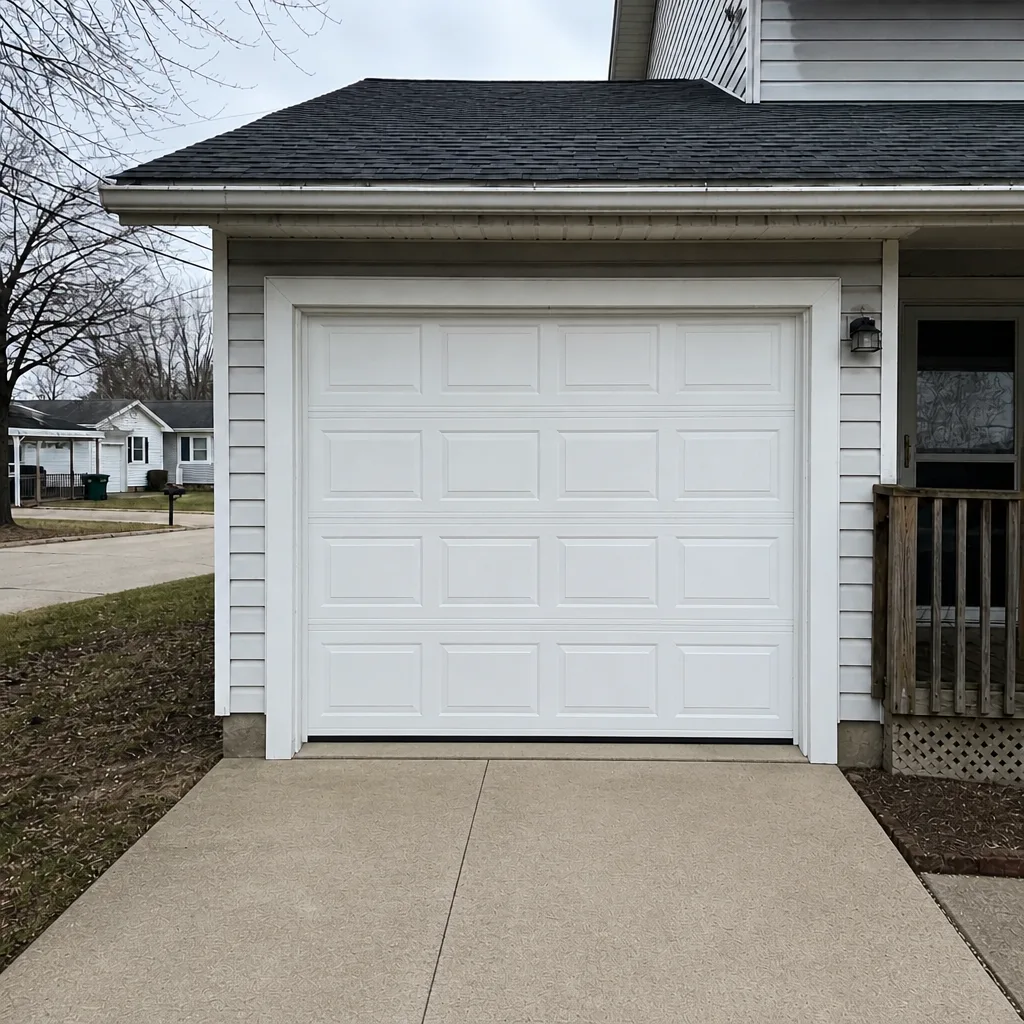 After
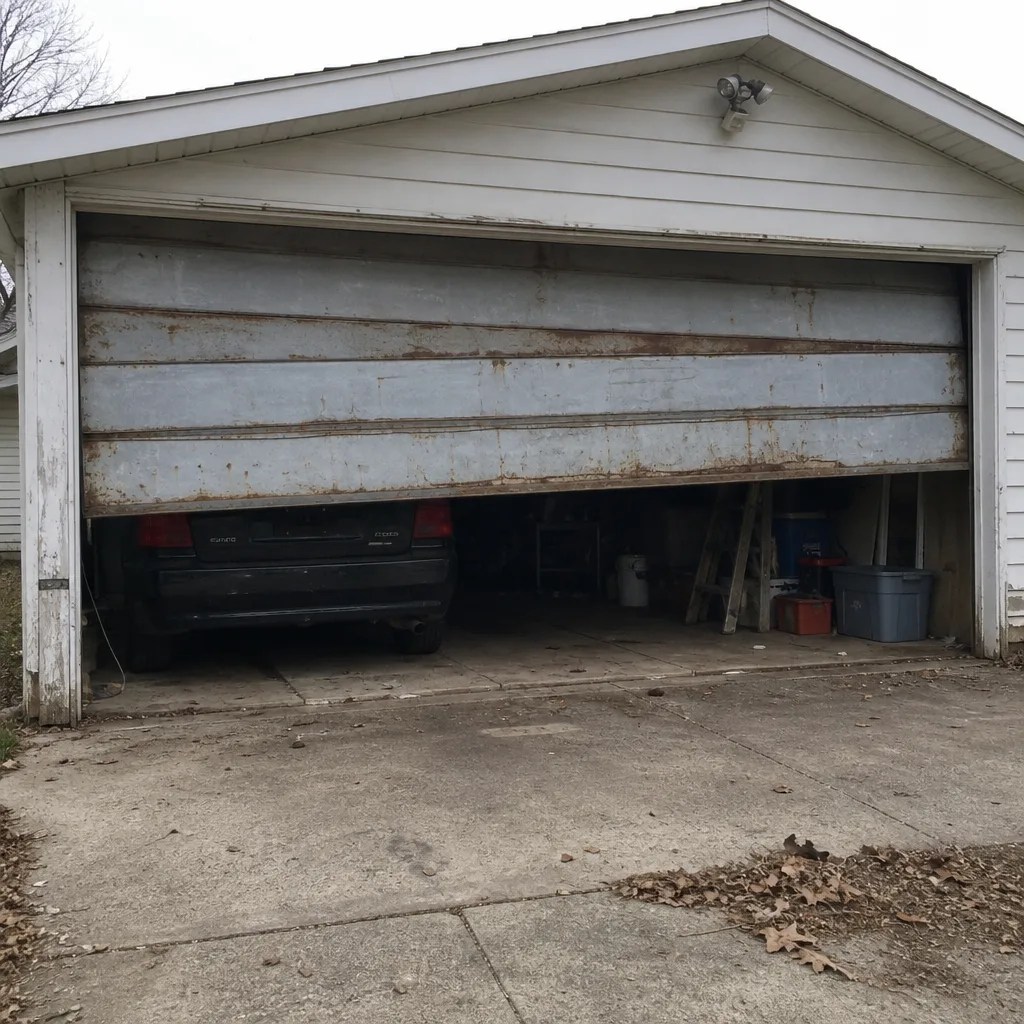 Before
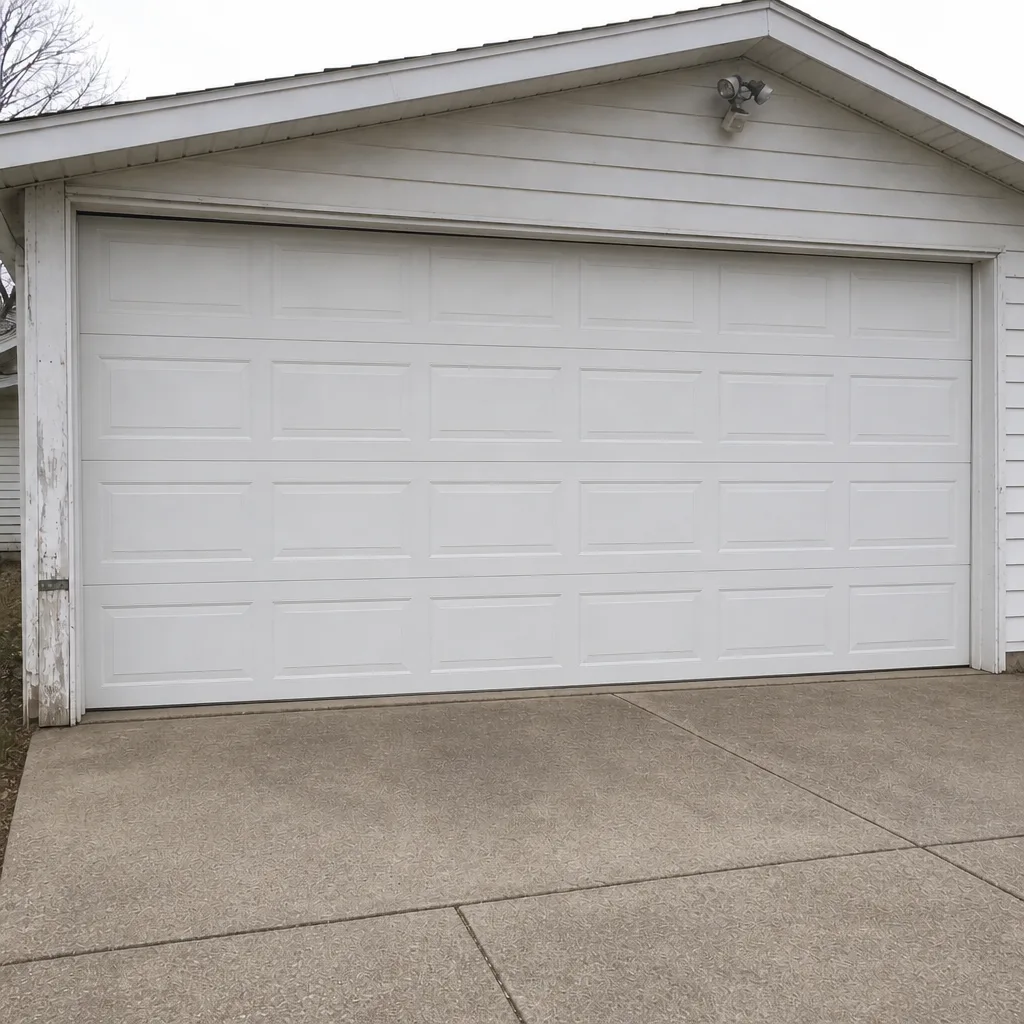 After
When to Call a Professional
Call a professional garage door technician when a spring has snapped or shows a visible gap, when your opener runs but the door doesn’t move, when the door comes off the track, or when you notice the door beginning to drag or close unevenly against the frame. Also call when the door is more than a few years old and hasn’t been inspected, or when winter is approaching and the door has developed rattles, noise, or binding that wasn’t there in summer. Delaware’s freeze-thaw cycles punish deferred maintenance more than most climates.
For a stuck door blocking your car, emergency service matters, and that’s a confirmed part of what we offer. We answer 24/7. Fast dispatch from 7am to 7pm, Sunday through Friday. For scheduled repair, spring replacement, or a new door installation in Delaware, get a free measure and written quote: Garage Door Repair Delaware offers free estimates in Delaware. Call (833) 509-5064. The estimate is free, the price is set per job in writing, and the quote is the number you pay.
Frequently Asked Questions
Before hiring, confirm four things: that the company works on the door brand and the opener brand actually in your garage, that the estimate is written and won’t change once they see the door in person, that they handle spring work, opener repair, and full installation rather than subbing out categories, and that the local pro is licensed and insured as their state requires. A company that can’t name your brand over the phone is already behind. Call (833) 509-5064 for a free estimate.
No. Garage door springs store enough energy to cause serious injury, and spring replacement is a professional-only job. We deliberately don’t publish DIY steps because doing so would put homeowners in real danger. What you can safely do is recognize the signs of a failing spring and call a technician before it snaps. Our technicians have up to 11 years of experience with spring repair. Call (833) 509-5064 for a free estimate.
Repeated freeze-thaw cycles stress springs more than any other weather pattern. Cold makes metal more brittle, and every warm-cool swing through the season adds tiny cycles of expansion and contraction to each spring. Seals crack, lubricants thicken, and tracks pull out of alignment. Fall tune-ups prevent most of this. If your door has already started binding or rattling, call (833) 509-5064 for a free estimate.
Repair is usually the answer when the damage is to components: springs, opener, rollers, hinges, tracks, or cables. Replacement makes more sense when panels are bent or dented throughout, when the door’s safety hardware is obsolete, or when the repair estimate approaches the cost of a new door. A written diagnosis gives you the real comparison. Our thorough diagnostic visit is free with an estimate. Call (833) 509-5064.
We work on eight major brands: LiftMaster, Chamberlain, Genie, Clopay, Amarr, Wayne Dalton, Craftsman, and Raynor. That covers both door manufacturers and opener manufacturers, so we can diagnose a whole system even when the door and the opener come from different brands, which is common in Delaware garages. Call (833) 509-5064 for a free estimate.
Yes. Emergency service is available for time-sensitive failures like a snapped spring, a door off track, or an opener that’s quit with your car trapped inside. We answer 24/7. Fast dispatch from 7am to 7pm, Sunday through Friday. A call outside dispatch hours is booked into the next opening, Sunday through Friday, 7am to 7pm. Call (833) 509-5064.
Ask for a written estimate, and ask what qualifies as a change in scope. Prices in Delaware vary by door weight, spring type, opener age, and whether additional parts (cables, rollers, drums) also need replacement. Anything you’re quoted on the phone for spring or opener work should be confirmed in writing once the technician sees the door. Call (833) 509-5064 for a free estimate.
The Bottom Line
Delaware, OH garage doors fail in patterns most national advice ignores. Clay-heavy soil pushes slabs and throws alignment off. Freeze-thaw cycles stress springs and seals harder than any other climate stress. And the age of your home predicts which component will wear out next. The right approach is to treat the door as one system and get a full diagnosis before deciding between repair and replacement. One call covers springs, openers, panels, and full doors, and thorough diagnosis costs you nothing. Whether you’re facing an urgent failure this morning or planning a new door for spring, call Garage Door Repair Delaware at (833) 509-5064. We answer 24/7. Fast dispatch from 7am to 7pm, Sunday through Friday. Free estimates, written pricing, and technicians who already know your brand.
Written by the team at Garage Door Repair Delaware.